7 SOC 2 Policy Templates to Speed SOC 2 Audit Readiness Now

Getting SOC 2 audit-ready without a dedicated compliance team feels like assembling furniture without instructions, except the stakes involve your customers' trust and your ability to close enterprise deals. The biggest time sink isn't the audit itself; it's writing the policies from scratch. That's where SOC 2 policy templates come in. They give you a proven starting framework so you're not staring at a blank document trying to guess what an auditor expects.
We know this firsthand. At SoFaaS, we built our managed SMART on FHIR platform on SOC 2 Type II compliant infrastructure because healthcare applications demand it, our customers integrate with EHRs like Epic and Cerner, and their partners and patients need to know data handling meets rigorous security standards. Going through that process taught us exactly how much time solid policy documentation saves (and how painful the gaps are when it's missing).
This article covers seven SOC 2 policy templates you can use right now to accelerate your audit preparation. Each one maps to a specific Trust Services Criteria, with practical notes on what auditors actually look for, so you spend less time guessing and more time building.
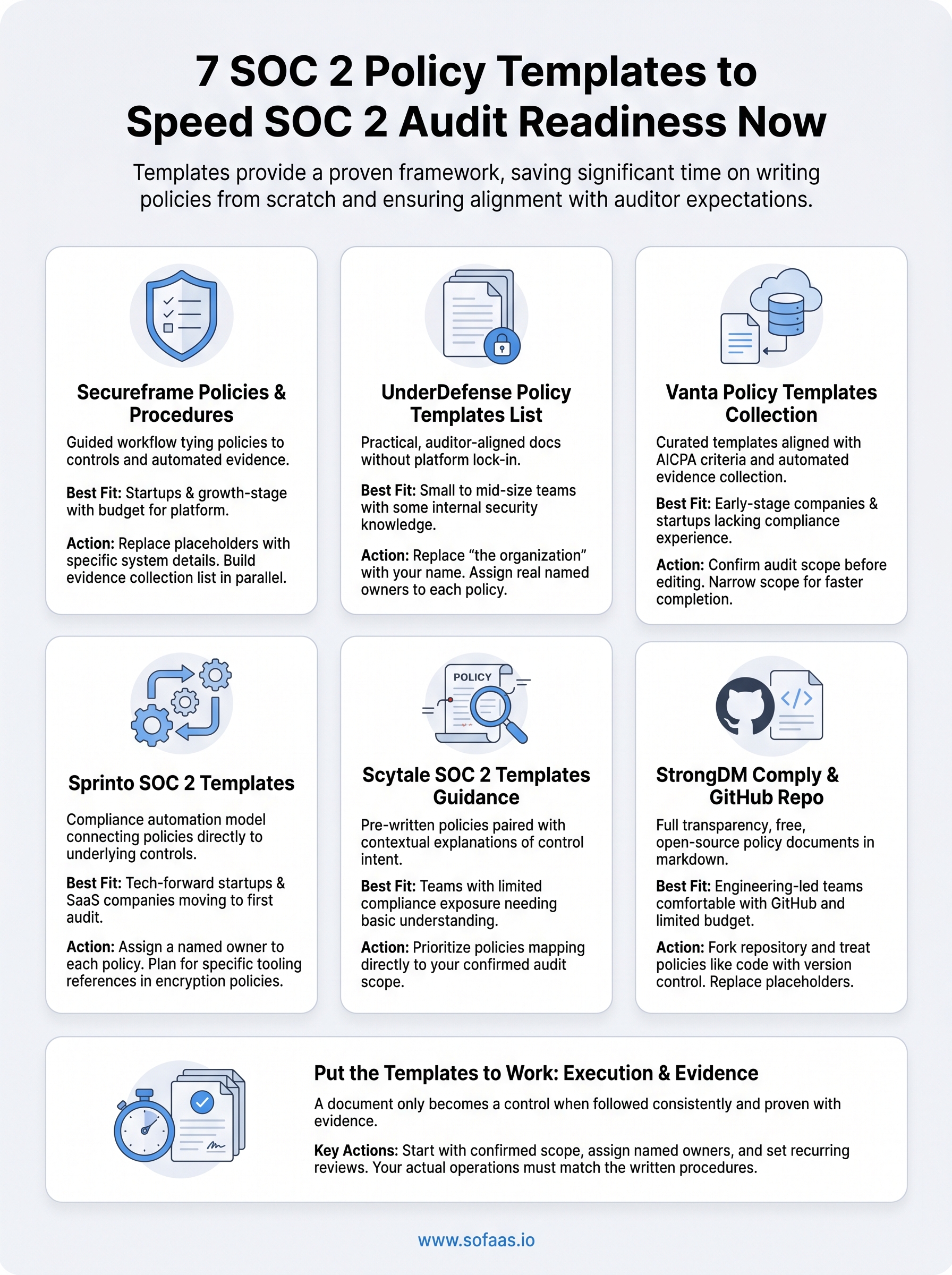
1. Secureframe SOC 2 policies and procedures
Secureframe offers one of the more structured sets of SOC 2 policy templates available from a compliance automation vendor. Their library covers the core policies auditors look for across all five Trust Services Criteria: Security, Availability, Confidentiality, Processing Integrity, and Privacy. Rather than handing you a generic Word document, Secureframe wraps its policies into a guided workflow that ties each document directly to the controls you need to implement and demonstrate.

What you get
Secureframe's policy library includes over 40 pre-built policy documents, covering access control, incident response, business continuity, vendor management, change management, and more. Each policy contains placeholder language you replace with your actual processes and systems. The templates follow AICPA Trust Services Criteria language closely, which means auditors recognize the structure immediately and spend less time asking clarifying questions about intent.
Best fit for
This template set works best for startups and growth-stage SaaS companies that want a checklist-driven approach and have budget for a compliance platform. Teams without a dedicated security officer benefit from the guided structure because it prevents you from overlooking critical control areas that auditors consistently flag during fieldwork.
How to customize it for your scope
Start by confirming which Trust Services Criteria your audit covers. Most companies begin with Security only for their first audit. Once you know your scope, go through each template and replace every bracketed placeholder with your specific systems, roles, and documented procedures. Give extra attention to access control and incident response policies, since those are the areas where auditors dig hardest for evidence that the control actually runs as written.
A policy that describes what you intend to do only holds up when your real-world practices match the written procedure on the day the auditor checks.
Evidence you should plan to collect
Each policy you finalize creates an evidence obligation. For access control, you need provisioning and deprovisioning records. For incident response, you need documented incident logs and post-mortems. For vendor management, you need signed security addendums. Build your evidence collection list in parallel with each policy so nothing surprises you when your auditor sends the evidence request list.
Cost and access
Secureframe's templates are available exclusively through a paid platform subscription. They do not offer a standalone free download. You need to contact their sales team directly for current pricing, which varies based on your company size, the number of frameworks in scope, and your contract length.
2. UnderDefense SOC 2 policy templates list
UnderDefense publishes a set of SOC 2 policy templates aimed at security teams that want practical, auditor-aligned documentation without platform lock-in. Their list covers the core control categories auditors check most frequently, giving you a solid baseline to build your compliance program around.
What you get
Their library includes ready-to-use policy documents that address common control areas such as information security, access management, and risk assessment. Each template follows standard AICPA language and comes formatted for immediate editing, so you are not rebuilding the structure from the ground up.
Best fit for
This collection works well for small to mid-size teams that need actionable policy documents quickly and prefer to manage compliance documentation independently rather than inside a vendor platform. Teams with some existing internal security knowledge will get the most value, since the templates assume a baseline familiarity with control frameworks.
How to customize it for your scope
Replace every generic reference to "the organization" with your actual company name and specific systems. Map each policy to the controls in your audit scope, then assign a real named owner inside your team for every document. Policies without a named owner are a pattern auditors flag immediately during fieldwork.
A policy document only becomes useful when a specific person in your organization is accountable for keeping it current and accurate.
Evidence you should plan to collect
For each policy you adopt, build a matching evidence checklist. Access management policies require user provisioning logs, and risk assessment policies require documented risk registers with remediation timelines attached.
Cost and access
These templates are available at no cost. You can access them directly through the UnderDefense website without a sales conversation or subscription commitment.
3. Vanta SOC 2 policy templates collection
The Vanta compliance platform provides a curated set of SOC 2 policy templates designed to align directly with the AICPA Trust Services Criteria. Their collection covers the most common control domains auditors examine, and each template connects to Vanta's automated evidence collection features when you use their platform.
What you get
Vanta's library includes pre-written policies for access control, incident response, data classification, and vendor risk management, among others. Each document is formatted to match typical auditor expectations, with clear section headers and placeholder language that guides you through customization without needing to rebuild the structure yourself.
Best fit for
This collection works best for early-stage companies and startups that want policy documentation and automated evidence collection under one roof. If your team lacks compliance experience, Vanta's structured approach reduces the chance of missing a control area that auditors consistently flag during fieldwork.
How to customize it for your scope
Replace all placeholder fields with your actual system names, team roles, and documented internal procedures. Confirm which Trust Services Criteria apply to your audit before editing, so you avoid spending time on policies outside your scope. Narrowing scope means faster audit completion and a tighter, more defensible evidence set.
Limiting your first SOC 2 audit to the Security category reduces documentation volume significantly and shortens your overall preparation timeline.
Evidence you should plan to collect
Each policy you adopt creates a corresponding evidence obligation. Access control policies require user provisioning and offboarding logs, while incident response policies require documented incident records with resolution notes attached.
Cost and access
Vanta's templates are accessible through a paid platform subscription. They do not offer standalone free downloads, so you need to contact their sales team for current pricing details.
4. Sprinto SOC 2 templates
Sprinto builds its SOC 2 policy templates around a compliance automation model that connects each policy document directly to the underlying controls your auditor needs to verify. Their collection covers the Trust Services Criteria categories most organizations include in a first-time audit, giving you a structured starting point rather than a blank page.
What you get
Sprinto provides policy templates spanning access control, encryption, vulnerability management, and business continuity, among other control areas. Each document includes pre-written language aligned to AICPA standards, with clearly marked sections where you insert your specific systems, roles, and operational procedures.
Best fit for
This template set works best for tech-forward startups and SaaS companies that want compliance documentation integrated with automated control monitoring from the start. Teams moving toward their first SOC 2 audit and looking to reduce manual tracking will get the most from Sprinto's connected approach.
How to customize it for your scope
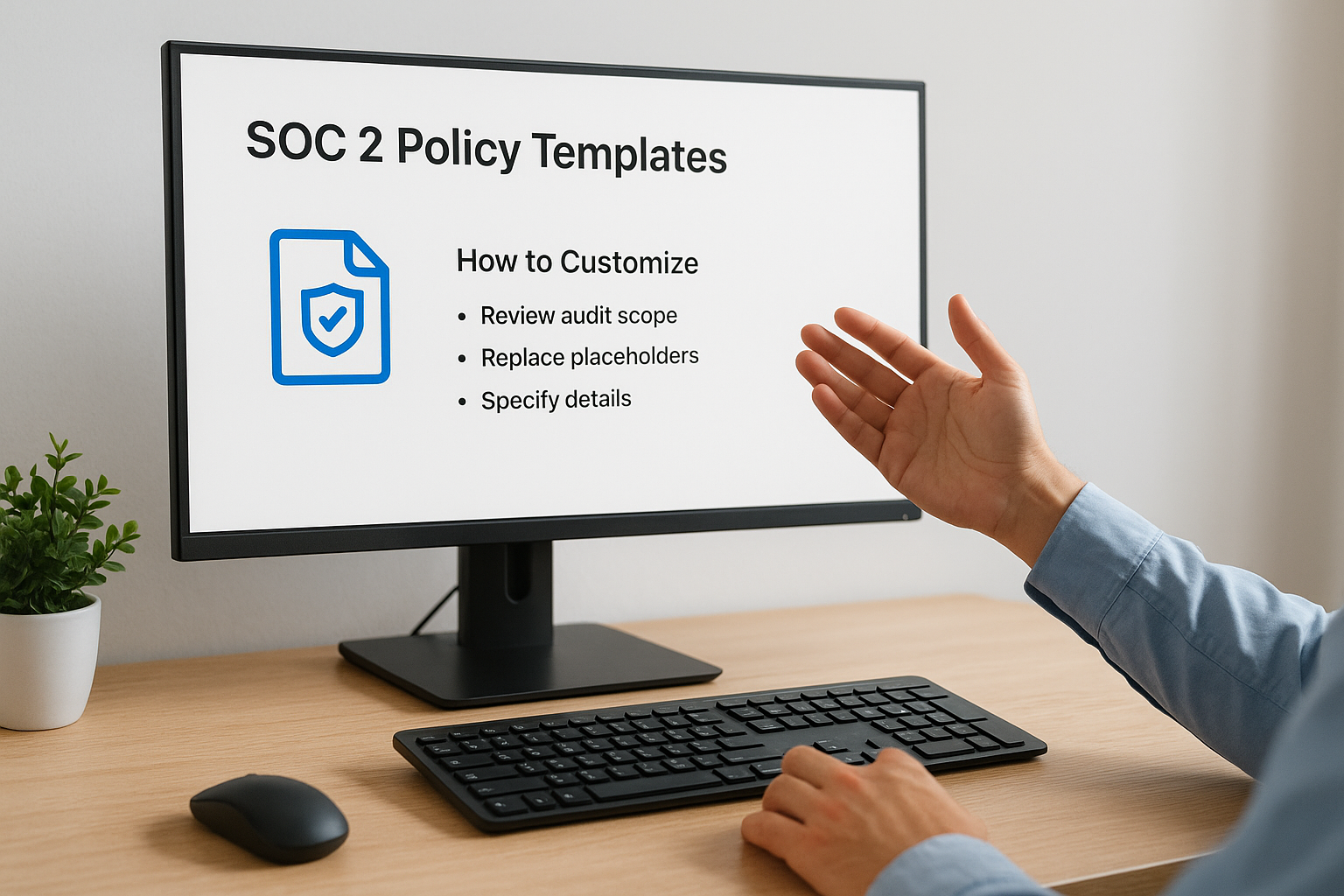
Review your audit scope first, then work through each template and replace every generic placeholder with your actual infrastructure details and team ownership. Pay particular attention to encryption and vulnerability management policies, since auditors consistently look for specific tooling references and remediation timelines in those sections.
Assigning a named owner to each policy before your audit starts gives auditors a direct contact for follow-up questions, which speeds up fieldwork considerably.
Evidence you should plan to collect
Each policy creates a matching evidence requirement. Vulnerability management policies need documented scan reports and remediation records, while encryption policies require configuration screenshots and key management procedures attached to each control.
Cost and access
Sprinto's templates come bundled inside their paid compliance platform. You need to contact their team directly for current pricing, which depends on your company size and the number of frameworks in scope.
5. Scytale SOC 2 templates guidance
Scytale approaches SOC 2 policy templates as part of a broader compliance readiness framework. Their guidance pairs pre-written policy documents with contextual explanations of why each control matters, so your team understands the intent behind the requirement rather than just copying placeholder text into a document.
What you get
Scytale's collection covers the core Trust Services Criteria categories most auditors review during a first-time engagement. Each template includes standard AICPA-aligned language alongside brief explanatory notes that help non-compliance professionals understand what the policy is designed to demonstrate to an auditor.
Best fit for
This option works well for teams with limited prior compliance exposure who need both the documents and a basic explanation of how each policy connects to specific audit controls. Founders and product managers carrying compliance responsibilities alongside other roles tend to find Scytale's annotated approach easier to act on quickly.
How to customize it for your scope
Work through each template and replace every generic organizational reference with your actual system names, tooling, and team roles. Prioritize the policies that map directly to your confirmed audit scope before editing anything outside that boundary.
Editing only the policies inside your audit scope prevents scope creep and keeps your evidence collection manageable from the start.
Evidence you should plan to collect
Each adopted policy creates a direct evidence obligation. Risk management policies need documented risk registers, while access control policies require user access logs and offboarding records with timestamps attached.
Cost and access
Scytale's templates are available through their paid compliance platform. Contact their sales team for current pricing based on your company size and framework scope.
6. StrongDM Comply and a GitHub SOC 2 repo
StrongDM's Comply project and its companion open-source GitHub repository offer a different approach to SOC 2 policy templates: full transparency with no platform required. The repository contains actual policy documents that teams have used in real SOC 2 audits, making it one of the most practical free resources available for organizations starting their compliance journey.
What you get
The GitHub repository includes markdown-formatted policy documents covering the core control areas auditors examine most, including access control, incident response, and data classification. Because the files live in a public version-controlled repository, you can fork them directly into your own workflow and track every change your team makes over time.
Best fit for
This option suits engineering-led teams that are comfortable working in GitHub and want to manage compliance documentation the same way they manage code. Organizations with limited compliance budget and strong internal technical ownership will find the open-source model fits their workflow naturally.
How to customize it for your scope
Fork the repository and replace every placeholder with your specific systems, tools, and named team roles. Work through only the policies inside your confirmed audit scope to keep your documentation set tight and auditor-friendly.
Treating your policy documents like code, with version history and named contributors, makes it easier to demonstrate to auditors that controls are actively maintained.
Evidence you should plan to collect
Each policy you adopt requires matching evidence records. Access control policies need user provisioning logs, while incident response policies need timestamped incident records with resolution notes attached.
Cost and access
The StrongDM Comply repository is completely free and publicly accessible on GitHub with no sign-up or subscription required.
Put the templates to work
The six SOC 2 policy templates listed here give you a real head start, but a document only becomes a control when your team follows it consistently and you can prove it. Pick the template set that matches your budget and technical comfort level, then commit to building your evidence collection process in parallel with every policy you finalize.
Your audit readiness comes down to two things: complete documentation and evidence that your actual operations match what the policies describe. Start with your confirmed audit scope, assign a named owner to each policy, and set a recurring reminder to review every document at least once a year.
If you build on SMART on FHIR infrastructure and need a platform that handles SOC 2 Type II compliance, HIPAA, and EHR integration inside one managed service, launch your SMART on FHIR app and see how SoFaaS removes the compliance burden from day one.
The Future of Patient Logistics
Exploring the future of all things related to patient logistics, technology and how AI is going to re-shape the way we deliver care.
Thank you! Your submission has been received!
Oops! Something went wrong while submitting the form.